
TWH.581.TTJ - Compressor Sweating
1. Background
Some compressor sweating can occur depending on the chiller operating conditions. However, excessive sweating may indicate that the compressor is drawing in liquid refrigerant or that the evaporator refrigerant level is too high.
Factory advice is to first confirm that the chiller is operating within its intended working range before making any refrigerant or control adjustments.
2. Checks Required
Before adjusting refrigerant charge or controls, verify the following:
| Check | Requirement |
|---|---|
| Chilled water flow | Confirm flow rate is within specification. |
| Water temperatures | Confirm entering and leaving water temperatures are within the expected operating range. |
| Thermal load | Confirm the unit is operating under a suitable site load. |
| Compressor operation | Confirm stable operation and check for excessive start/stop cycling. |
| Refrigerant charge | Confirm the correct charge, especially for units supplied NI / without refrigerant. |
| Evaporator sight glass | Confirm refrigerant level is within the acceptable range. |
3. Important Refrigerant Level Guideline
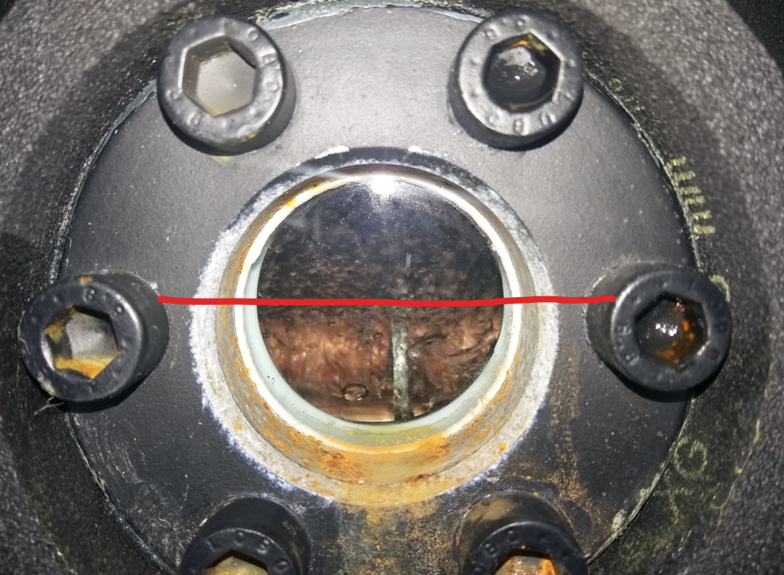
If the level is above 50%, refrigerant may need to be removed. Use the reference image below as a guide; the red line indicates the approximate maximum acceptable level.
4. Likely Causes
- Evaporator refrigerant level is too high.
- The unit is overcharged with refrigerant.
- The unit is operating under low thermal load.
- Compressors are starting and stopping frequently.
- The chiller is not reaching steady-state operating conditions.
- Evaporator refrigerant level control becomes unstable under low-load operation.
5. Notes on Low Thermal Load Operation
TT units are not ideal for very low thermal load operation.
When the thermal load is low, the compressors may frequently start and stop. This can prevent the unit from reaching steady-state conditions and may result in sub-optimal evaporator refrigerant level control.
6. Recommended Action
- Confirm operating conditions. Check water flow, entering/leaving water temperatures, site load and whether one or both compressors are sweating.
- Check refrigerant charge. Confirm the correct refrigerant quantity was charged during commissioning, particularly for NI / uncharged units.
- Inspect the evaporator sight glass. Confirm the level does not exceed 50% of the sight glass.
- Remove refrigerant if required. If the level is above 50%, recover refrigerant until the level is within the acceptable range. This must be performed by appropriately qualified personnel.
- Monitor compressor operation. Check for frequent cycling and confirm whether the chiller can reach stable operating conditions.
- Escalate if the issue remains. If sweating continues after confirming operating range and refrigerant level, escalate to factory / GI technical support. Control parameter optimisation may be required under low-load conditions.