AIRSTAGE Technical Reference
Low Noise Mode and Peak Cut Mode
External input wiring, function settings and verification
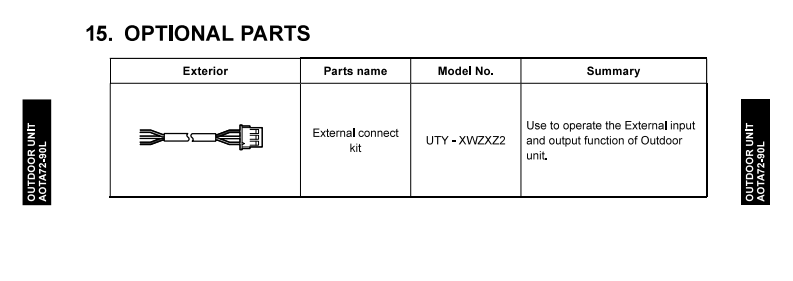
Outdoor unit PCB configuration using CN131 and the UTY-XWZXZ2 external connector kit
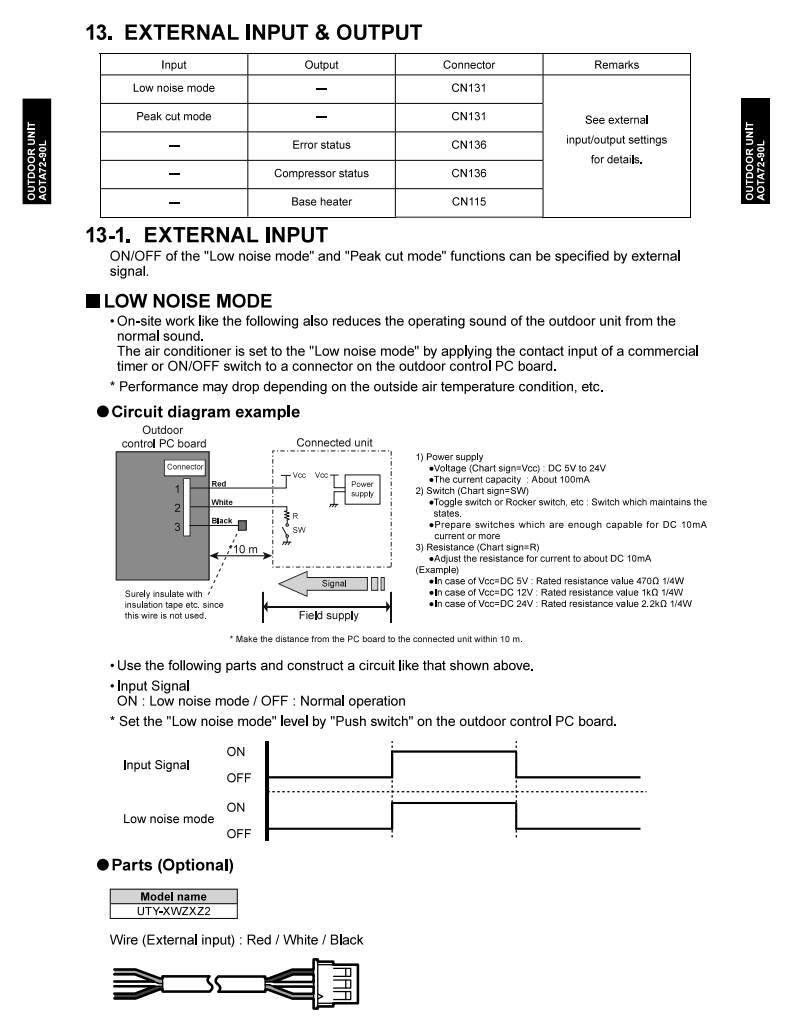
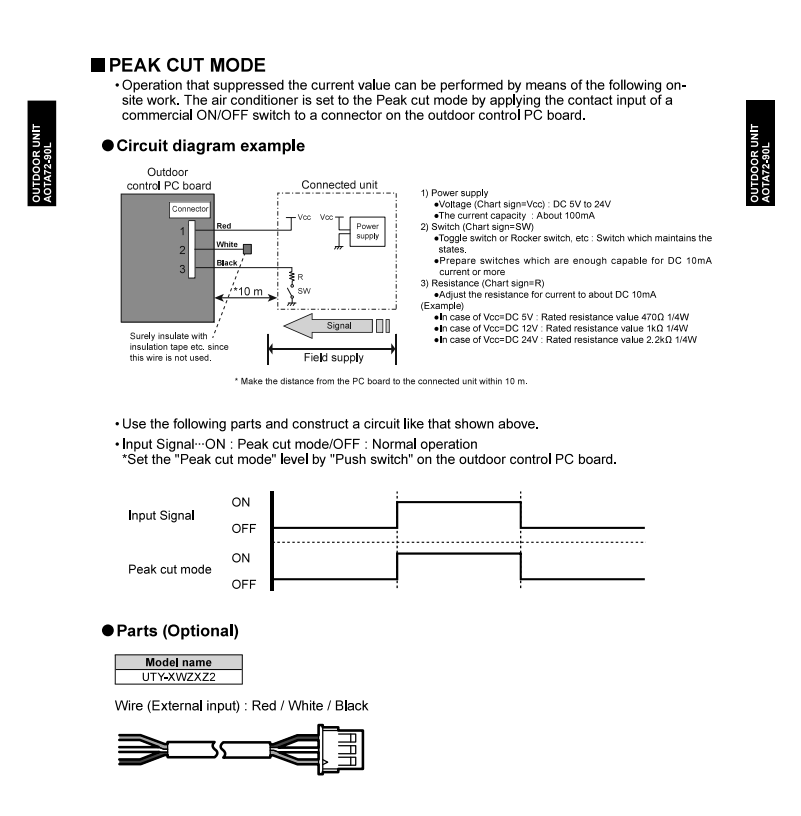
Overview: Low Noise Mode reduces outdoor unit operating sound by limiting compressor and fan speed. Peak Cut Mode limits power draw and compressor capacity. Depending on the application, these functions can be controlled by an external input through CN131 or configured directly from the outdoor unit PCB.
Qualified personnel only: Isolate power before accessing the outdoor unit PCB. Confirm connector location, wiring polarity, insulation and applicable model documentation before energising the system.
1. Functions and required component
External Connector Kit: UTY-XWZXZ2
Includes red, white and black lead wires for connection to CN131.
Includes red, white and black lead wires for connection to CN131.
| Function | Purpose | External input operation |
|---|---|---|
| Low Noise Mode | Reduces compressor and fan speed to minimise operating noise. | ON: Low noise operation OFF: Normal operation |
| Peak Cut Mode | Limits power draw and compressor capacity. | ON: Output limited to the configured level OFF: Normal compressor operation |
Low Noise Mode performance depends on outdoor temperature and fan control logic. Activating Low Noise and Peak Cut together may significantly reduce available capacity.
2. External input connection - CN131
| Connector | CN131 on the outdoor unit PCB |
| Input voltage | DC 5-24 V, 100 mA maximum load |
| Maximum wiring distance | 10 m from the outdoor unit PCB |
| Switch or relay contact | Toggle switch, rocker switch or relay contact suitable for 10 mA DC |
Lead wire identification
| Lead | Connection |
|---|---|
| Red | +V, 5-24 V DC |
| White | Signal / switch input |
| Black | GND |
Typical resistor selection
| Supply voltage | Typical resistor for approximately 10 mA |
|---|---|
| 5 V DC | 470 ohm |
| 12 V DC | 1 kohm |
| 24 V DC | 2.2 kohm |
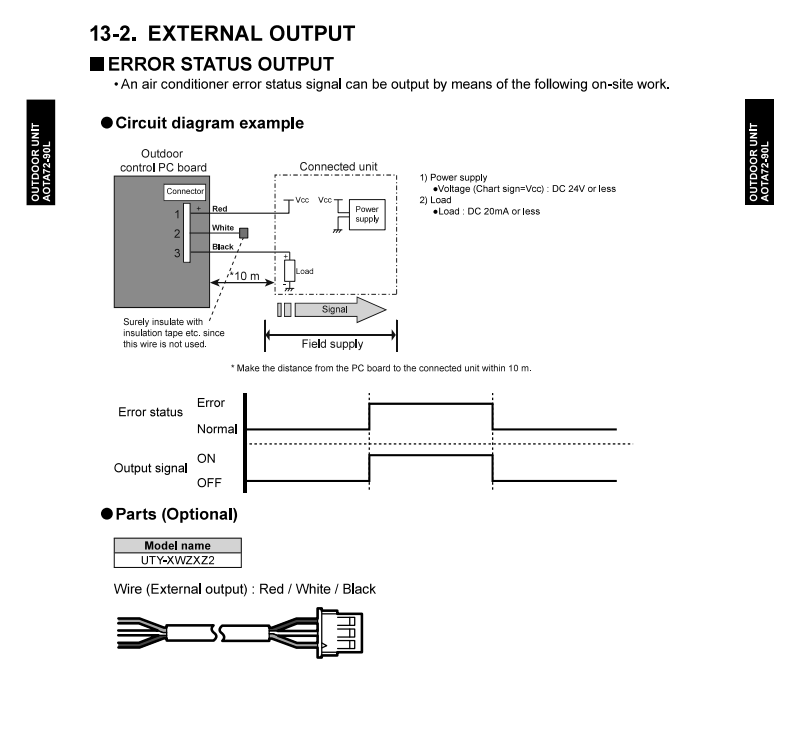
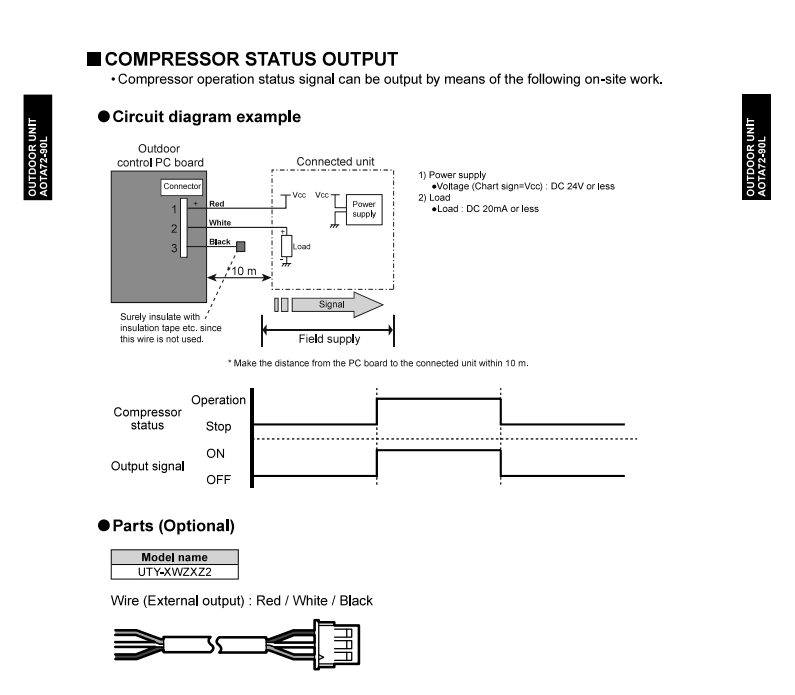
3. External output options
Additional outdoor unit signals may be available for monitoring:
| Output | Connector | Operation |
|---|---|---|
| Error status | CN136 | ON during a fault condition |
| Compressor status | CN136 | ON while the compressor is operating |
| Base heater | CN115 | Active when outdoor temperature is 2 degrees C or below |
External outputs are open-collector DC signals rated at 24 V maximum and 20 mA.
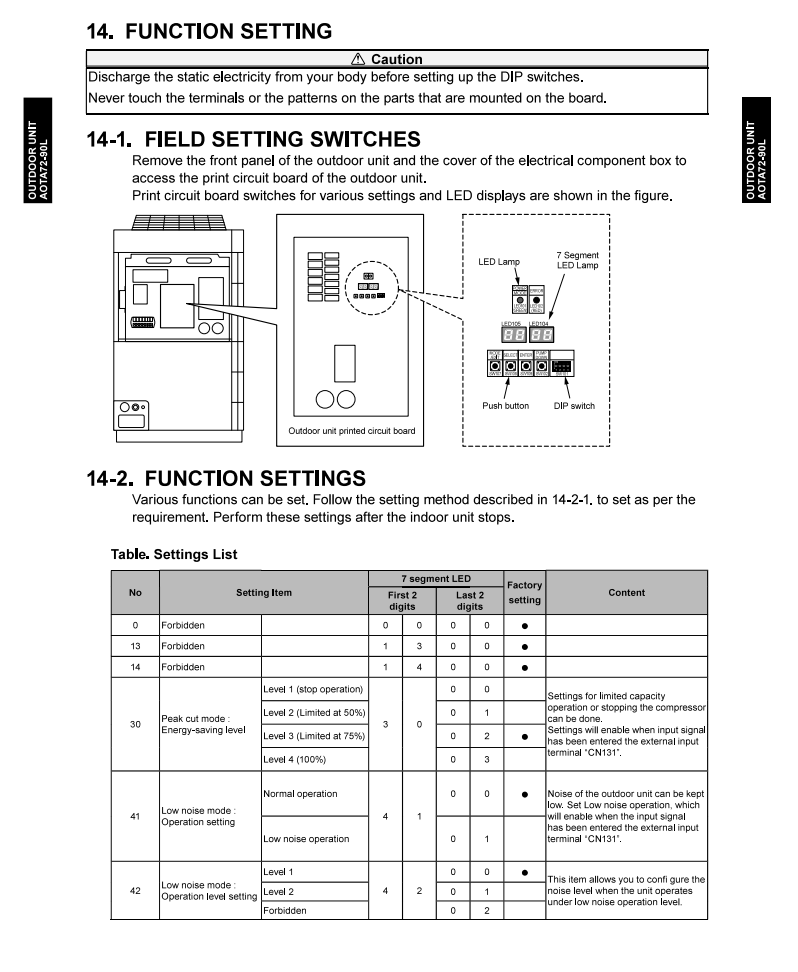
4. Outdoor unit function settings
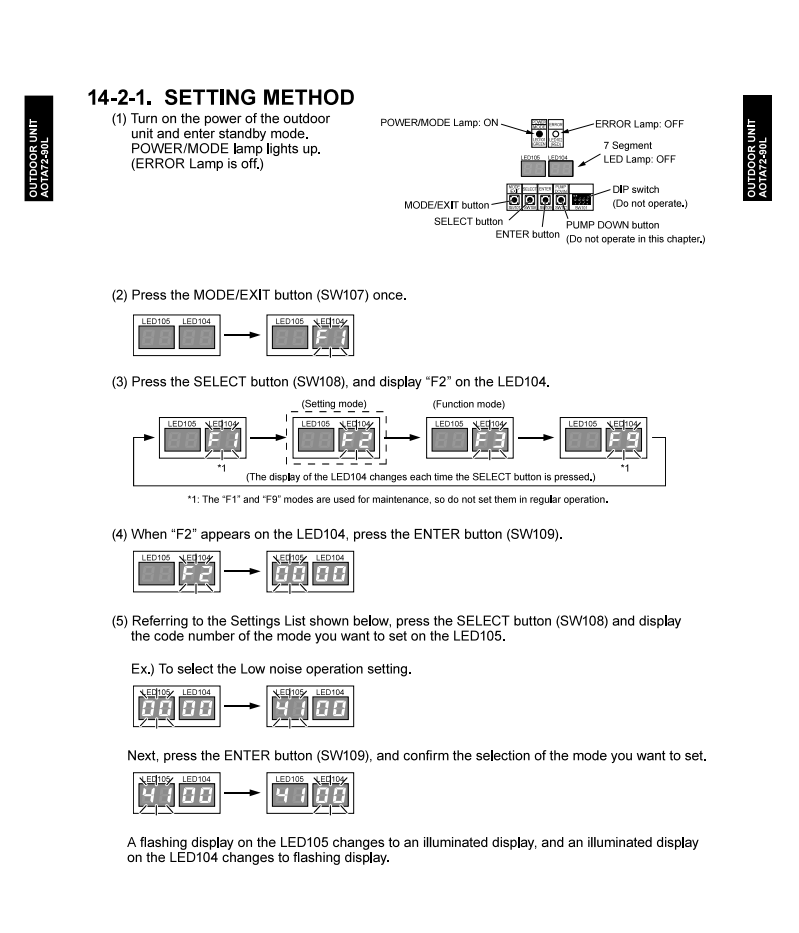
Access procedure
- Power the outdoor unit and leave the system in standby.
- Press MODE/EXIT once.
- Press SELECT until F2 appears on LED104.
- Press ENTER to enter Function Setting Mode.
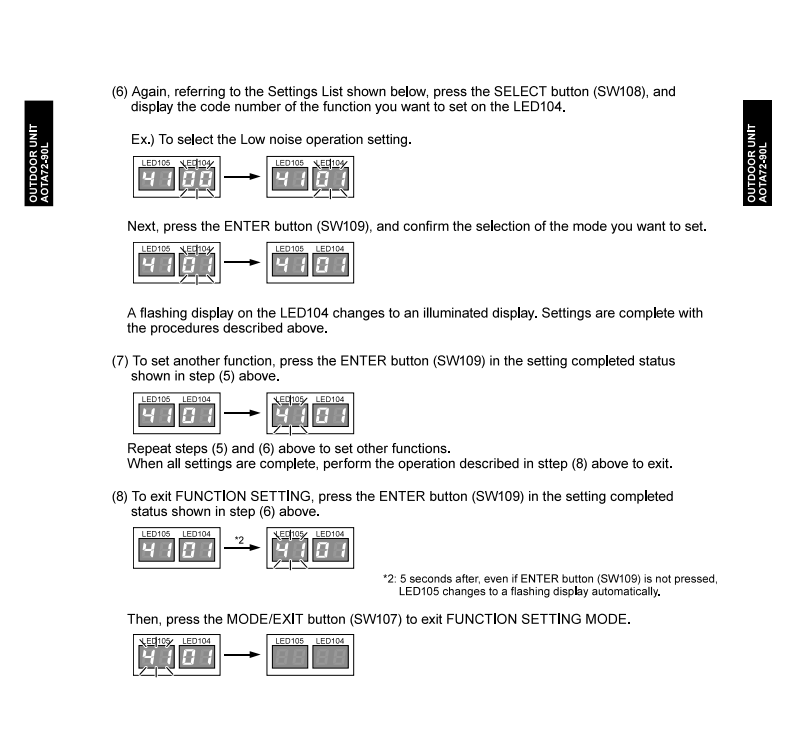
- Use SELECT to choose the required setting item.
- Press ENTER to confirm and store the setting.
| Item | Code | Factory default | Options |
|---|---|---|---|
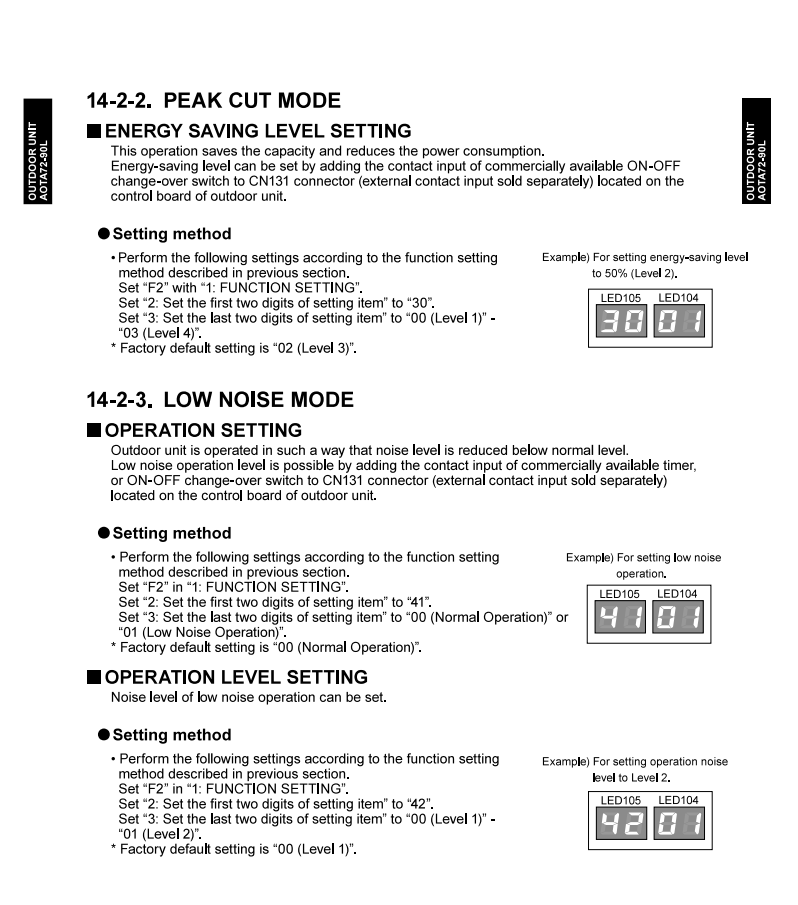
| Peak Cut Mode - energy-saving level | 30 | 02 - Level 3 / 75% | 00: Stop 01: 50% 02: 75% 03: 100% |
| Low Noise Mode - operation setting | 41 | 00 - Normal | 00: Normal 01: Low Noise Mode |
| Low Noise Mode - operation level | 42 | 00 - Level 1 | 00: Level 1 01: Level 2 |
Setting examples
Enable Low Noise Mode
Function item 41 - Setting 01
The outdoor unit reduces fan and compressor speed to minimise noise.
Function item 41 - Setting 01
The outdoor unit reduces fan and compressor speed to minimise noise.
Limit compressor output to approximately 50%
Function item 30 - Setting 01
Function item 30 - Setting 01
5. Installation and functional verification
Typical installation sequence
- Install the UTY-XWZXZ2 harness onto CN131.
- Connect the external switch or BMS control relay.
- Confirm wiring polarity, resistor selection and insulation.
- Toggle the input and confirm the expected fan speed, sound or power response.
- Store the final PCB configuration using the ENTER button.
Verification
- Low Noise Mode: The outdoor unit sound level should reduce after approximately 1-2 minutes, subject to operating conditions.
- Peak Cut Mode: Compressor current should reduce in line with the configured output level.
- Confirm operation using service LED indications or current measurement where applicable.
Field guidance
- Avoid enabling Low Noise and Peak Cut simultaneously unless the site requirement justifies the combined capacity limitation.
- After testing, restore the required final setting. Do not leave an unintended capacity restriction active.
- For longer signal cable runs, use appropriately screened cable and route it away from sources of electrical interference.
6. Reference diagrams
The following diagrams are retained from the source article and use Freshdesk-hosted attachment URLs.